DEVARAYANADURGA
The Sacred Hill of History, Legends and Nature — ancient Narasimha temples amid rocky hills near Bengaluru.
Overview
Devarayanadurga is a historic hill station and pilgrimage destination located in the Tumakuru district of Karnataka, approximately 70 kilometers from Bengaluru. Nestled amidst rocky hills, dense forests, and scenic landscapes, it is renowned for its ancient temples dedicated to Lord Narasimha. The destination attracts pilgrims, trekkers, photographers, history enthusiasts, and nature lovers throughout the year. The cool climate, spiritual atmosphere, and panoramic views make it one of Karnataka’s most treasured heritage destinations.
History
Devarayanadurga has a rich history that spans several centuries and is associated with many of Karnataka’s prominent dynasties. Originally, the region was known as Anebiddasari, which means “The Place Where the Elephant Fell.” Later, it came to be known as Jadakanadurga, named after a local chief called Jadaka. The present name, Devarayanadurga, was adopted after the region came under the control of the Mysore Kingdom during the reign of King Chikka Devaraja Wodeyar in the 17th century. Historical records suggest that during the Hoysala period, a settlement existed on these hills. During the Vijayanagara Empire, the area gained strategic and religious importance. A large reservoir known as Bukkasamudra was constructed during this period, and remnants of its embankment can still be seen today. The hill also functioned as a natural fortress due to its elevated terrain and strong defensive position.
Mythological Significance
According to Hindu mythology, Lord Brahma performed severe penance at this sacred hill to seek the blessings of Lord Vishnu. Pleased by his devotion, Lord Vishnu appeared in the form of Yoga Narasimha Swamy, making the hill an important Vaishnavite pilgrimage center. A famous local legend tells of a Gandharva who was cursed and transformed into an elephant. The elephant caused fear among the local inhabitants and eventually attempted to climb the steep western cliff. It slipped and fell to its death, giving rise to the name Anebiddasari, meaning “The Hill Where the Elephant Fell.” The hill is also known by other ancient names: • Karigiri (Elephant Hill) • Kusumadri (Hill of Flowers) According to another legend, the gods showered flowers upon Lord Vishnu after he defeated the demon Pundarika, leading to the name Kusumadri.
Architecture
The temples of Devarayanadurga are excellent examples of traditional Dravidian architecture with stone pillars, intricate carvings, and elements from the Chola, Hoysala, Vijayanagara, and Mysore periods.
Yoga Narasimha Temple
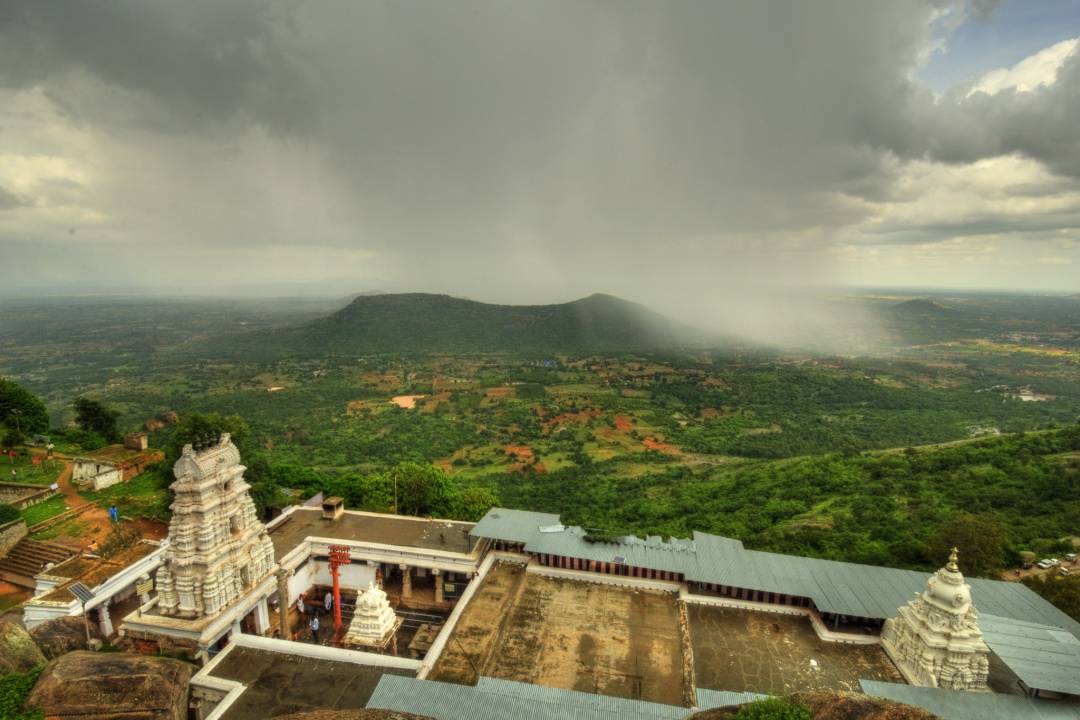
Situated at the summit of the hill, dedicated to Lord Narasimha in a meditative form with magnificent valley views.
Bhoga Narasimha Temple
Located at the foothills, the primary worship center for devotees visiting the region.
New item
Major Attractions
Yoga Narasimha Swamy Temple
Ancient hilltop temple dedicated to Lord Narasimha.
Bhoga Narasimha Swamy Temple
Historic temple at the base of the hill.
Kalyani Theertha
Sacred pond with spiritual significance.
Namada Chilume
Natural spring associated with Lord Rama.
Scenic Viewpoints
Spectacular sunrise and sunset views.
Forest Area
Rich biodiversity and lush greenery.
How to Reach
By Road: Regular KSRTC and private buses from Bengaluru and Tumakuru. By Train: Nearest station — Tumakuru Railway Station. By Air: Nearest airport — Kempegowda International Airport, Bengaluru.
Watch the Journey
Video
Location
Tap Directions for a driving route from your current location.